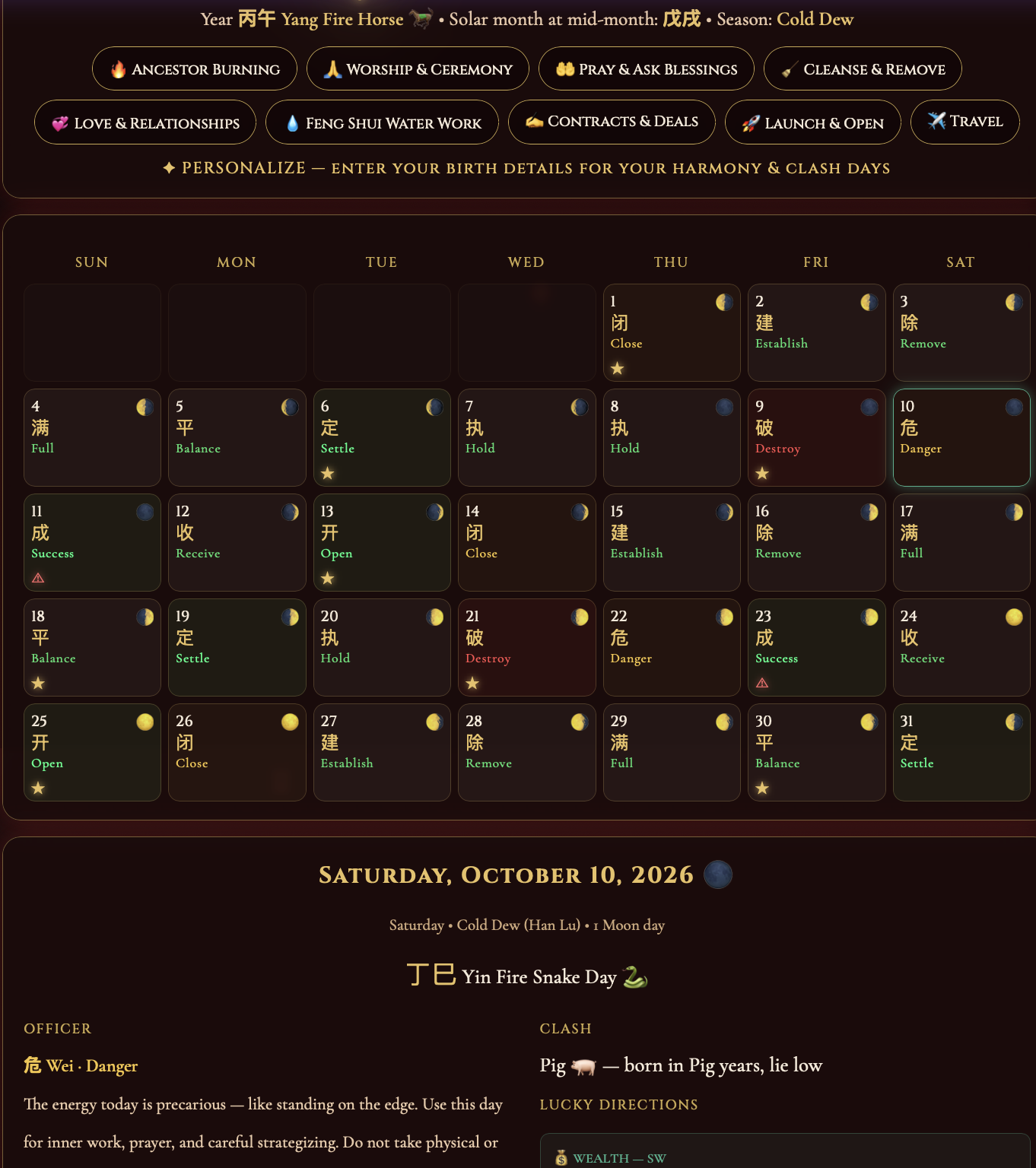
Some decisions are too important to make on instinct alone, and a little structure helps. Signing a contract, launching a project or moving house all carry consequences that unfold for months or years. The Tong Shu Oracle does not decide these things for you, but it can help you compare possible dates and choose the one that fits the work best.
Start With a Shortlist
Begin with the decision itself. Write down what needs to happen and the earliest and latest dates that would work. Then use the calendar to shortlist three or four candidate days inside that window. A shortlist keeps the process focused and prevents you from scanning endlessly for a perfect date that may not exist. For most people, a good date inside a workable window is more useful than a theoretical ideal. Keeping the shortlist to three or four options also makes it easier to explain your choice to partners, clients or family.
Check the Period, Then the Day
Once you have a shortlist, look at the two-hour periods on each candidate day. Harmony windows suggest good moments for conversations, agreements and first steps. Clash alerts suggest slowing down and confirming details. A day that looks promising overall can still have a difficult period at the time you need, so it is worth checking both the day and the hour before you commit.
Set the Date, Then Prepare the Work
Choosing a date is not the same as getting the work done. A contract still needs careful reading, a launch still needs a clear plan, and a move still needs logistics. Use the chosen date as a deadline for preparation, and list the tasks that must be done before then. Work backward from it, so the preparation is finished before the day arrives. When the date comes, you will be ready to act with the timing you selected.
Keep a Plan B
Because timing is one factor among many, keep a backup date on your shortlist. If a counterparty, a supplier or a family schedule changes, you can shift to the next candidate without starting over. Writing down why you chose each date also helps you review the decision later, whether it worked out or not. Note the period you picked, the reasons you gave, and what you would do differently next time. That record is useful for future choices, and it keeps your reasoning honest.
Compare your candidate dates with a 24-hour free trial.